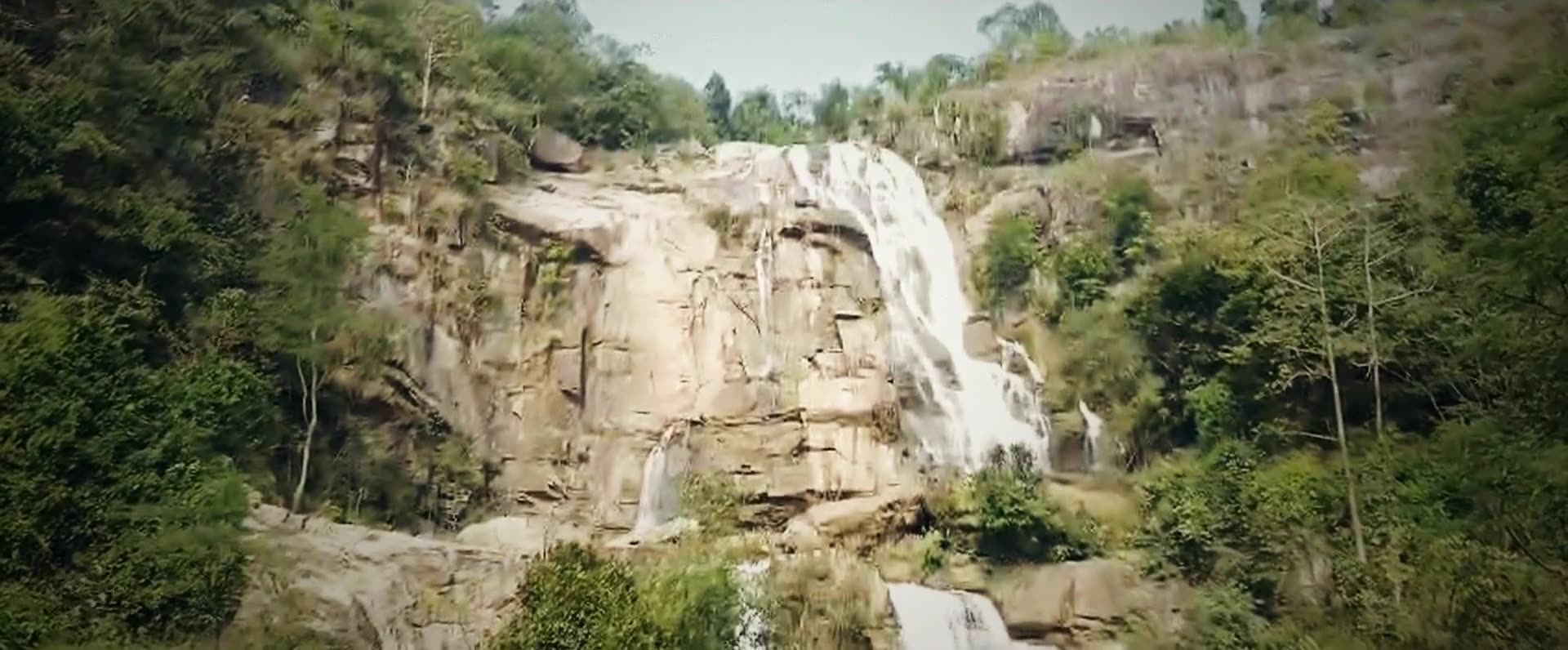
Every bottle of Infinity starts on the Chhotanagpur Plateau, the old, high land that covers most of Jharkhand. Long before the water reaches our plant in Angara Block, Ranchi, rain, forest and rock have already done most of the work.
An old, high land
The plateau's largest part, the Ranchi Plateau, sits at around 700 metres above sea level. Beneath it lies granite and gneiss, some of which formed more than a billion years ago. It is some of the oldest rock in India.
Rain that has time to soak in
The plateau receives roughly 1,000 to 1,500 mm of rain a year, most of it during the monsoon. Deciduous forests rich in sal cover the hills. They hold the soil together and slow the rain down, giving it time to soak into the ground instead of rushing away.
How the water picks up its minerals
Once underground, water moves slowly through the soil and the cracks in the ancient rock. Along the way it picks up minerals such as calcium and magnesium. By the time it reaches our source, those minerals are already in the water. We don't add them.
Calcium: 40 mg per litre
Magnesium: 16.52 mg per litre
Total dissolved solids: 200 to 290 mg per litre
pH: 7.4 to 8.2, naturally alkaline
What we do, and what we don't
Infinity Natural Alkaline is filtered and bottled, keeping its natural balance. Infinity Silver is boiled to 100 °C the traditional way, over a fire of eco-friendly biomass pellets, and then treated with silver. We don't use reverse osmosis on Infinity Silver, so its calcium and magnesium stay in.
Water that took its time.
Sources: Encyclopaedia Britannica; Wildlife Institute of India; Sequeira et al., Lithosphere (2020). Mineral values are typical values from our labels.
Why the Chhotanagpur highlands make good water
Rain, sal forests and rock more than a billion years old: a short look at where Infinity comes from.